
Customer service is no longer just about answering tickets. In 2025, AI will reshape how brands interact with people, making support faster, smarter, and more human-like. Companies that combine automation with empathy are already seeing higher loyalty, lower costs, and happier customers.
Here’s how you can use AI to reinvent your customer service this year.
TL; DR: Quick Takeaways
- AI chatbots handle repetitive queries instantly, freeing human agents.
- Predictive analytics anticipate problems before customers complain.
- Sentiment analysis helps companies respond with empathy.
- Smart ticket routing and self-service boost efficiency.
- Human + AI hybrid models deliver the best customer experiences.
What Does AI in Customer Service Actually Mean?
AI in customer service uses technologies like:
- Chatbots & virtual assistants for instant answers
- Predictive analytics to prevent churn
- Sentiment analysis to detect customer emotions
- Natural language processing (NLP) to route tickets
- Self-service platforms powered by AI search
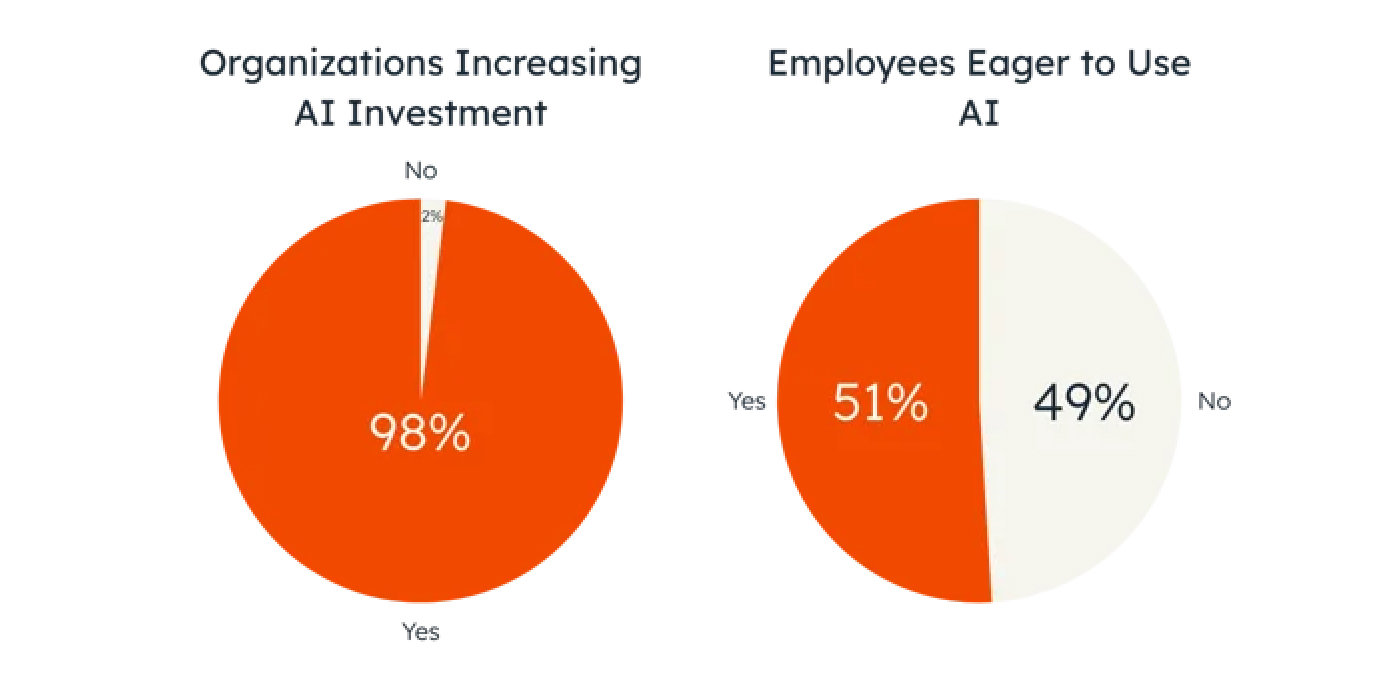
👉 A recent survey shows that 98% of organizations are increasing their AI investments, while just over half of employees (51%) are eager to use it. This highlights both the rapid growth of AI in customer service and the need to align tech adoption with employee readiness.
Why Businesses Are Betting Big on AI
- 24/7 support → AI never sleeps.
- Faster responses → customers don’t wait in queues.
- Lower costs → automation reduces overhead.
- Scalable support → AI handles peak loads effortlessly.
- Fewer errors → automation reduces mistakes.
IBM reports that over 70% of service managers already rely on AI to analyse sentiment, proving that AI is now standard in customer care.
How Companies Are Using AI Today
- Salesforce: Its Agentforce AI resolves queries with about 93% accuracy, freeing agents for complex issues (Business Insider).
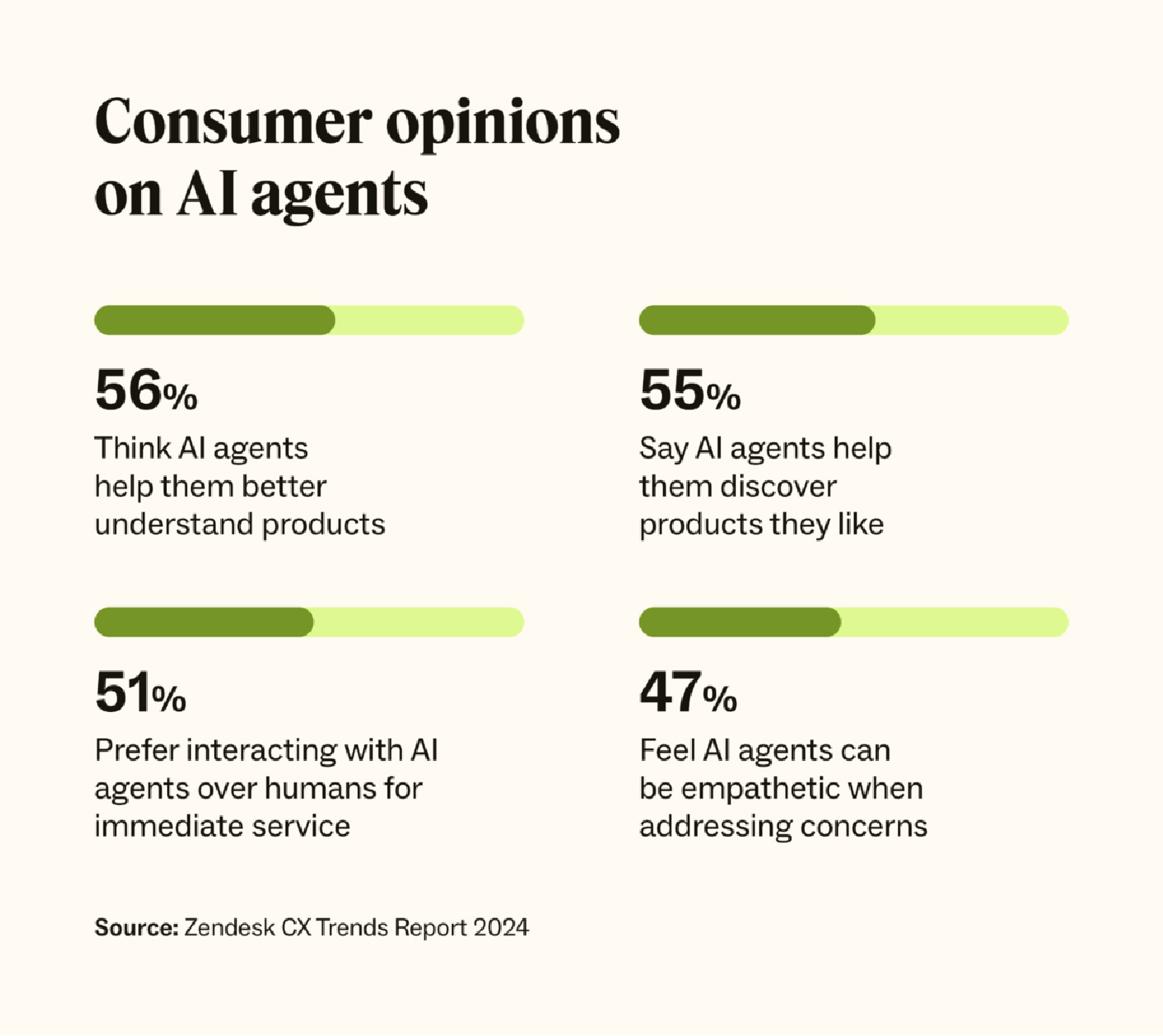
- Zendesk: Nearly half of consumers believe AI agents can deliver empathetic support (Zendesk).
7 Ways to Reinvent Customer Service With AI
1. AI Chatbots for Instant Queries
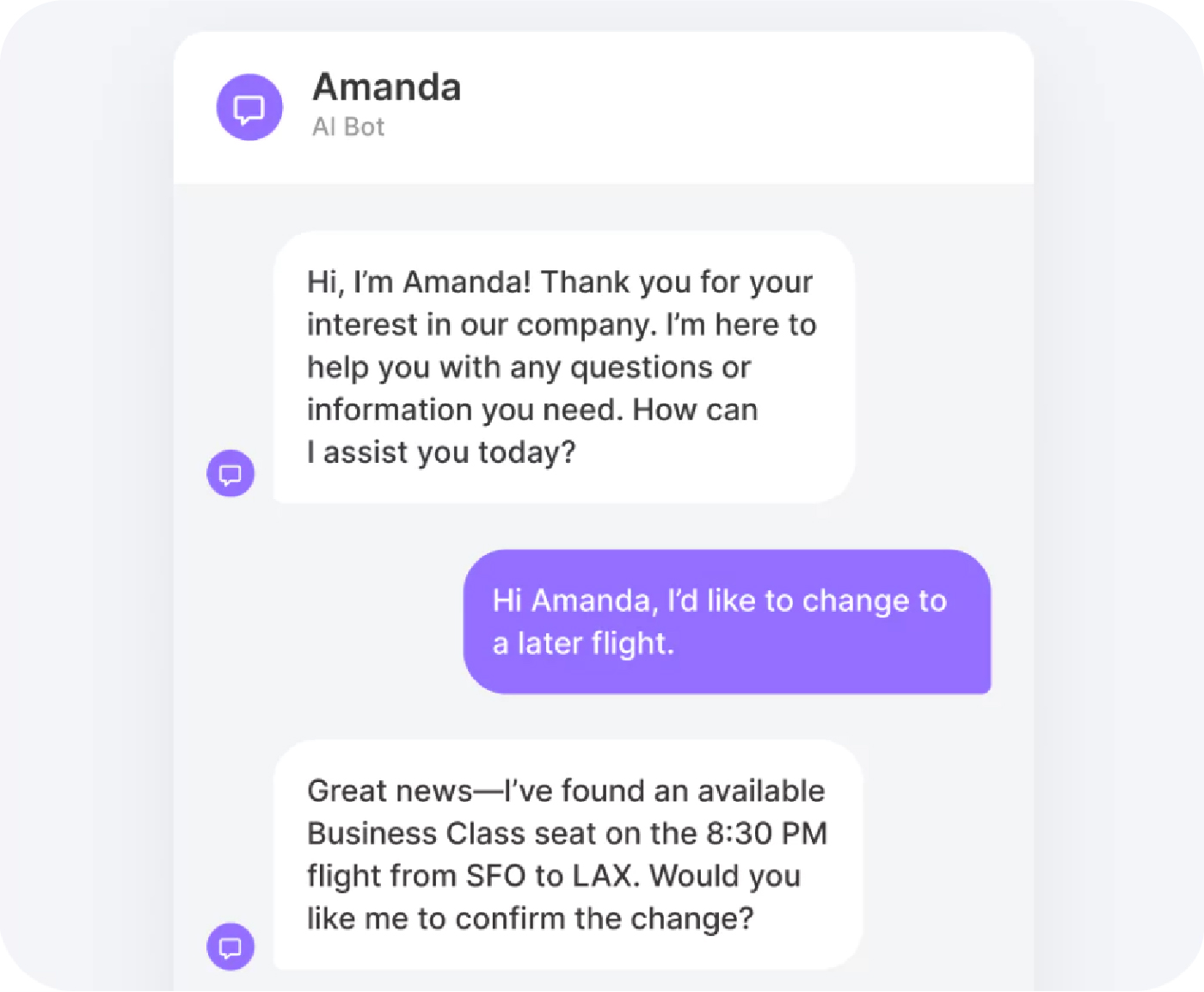
AI chatbots resolve FAQs, login issues, or plan inquiries without human effort.
Source: https://www.voicespin.com/ai-chatbot/
2. Predictive Analytics for Proactive Support
AI detects drop-offs, abandoned carts, or feature confusion before customers complain. You can then trigger solutions like offering discounts or sharing tutorials.
3. Sentiment Analysis to Understand Emotions
AI reviews chat logs, surveys, and social mentions to understand if customers are happy, frustrated, or confused.
4 Smart Ticket Routing
NLP-driven systems automatically send cases to the right agent based on complexity and workload. That means faster first contact resolution and less back-and-forth.
5. Smarter Self-Service
AI-powered knowledge bases deliver relevant answers instantly, empowering users to fix issues themselves.
6. Personalised Recommendations
AI tailors’ advice, tutorials, or product options based on user behaviour. For instance, Netflix uses AI-driven algorithms to recommend shows and movies based on viewing history, watch time, and even the time of day you’re likely to watch.
This same approach can be applied in customer service, suggesting the right help articles, product plans, or feature tutorials at exactly the right moment.

7. Hybrid Human + AI Model
Automation does the heavy lifting, while humans step in for nuanced, emotional, or high-stakes situations. This balance ensures that service is both efficient and empathetic.
The Future: Where AI in CX Is Heading
- By late 2025, 95% of interactions may be powered by AI (Fullview).
- AI will become emotionally adaptive, adjusting tone to the customer’s mood.
- Customers will expect personalised service as the default, not a perk.
- Support teams will shift focus to relationship building and strategy.
⚠️ But beware: Customer Experience Dive found that people dislike AI when it feels impersonal. Blending automation with empathy is the winning formula.
Market Outlook: Generative AI in Customer Service
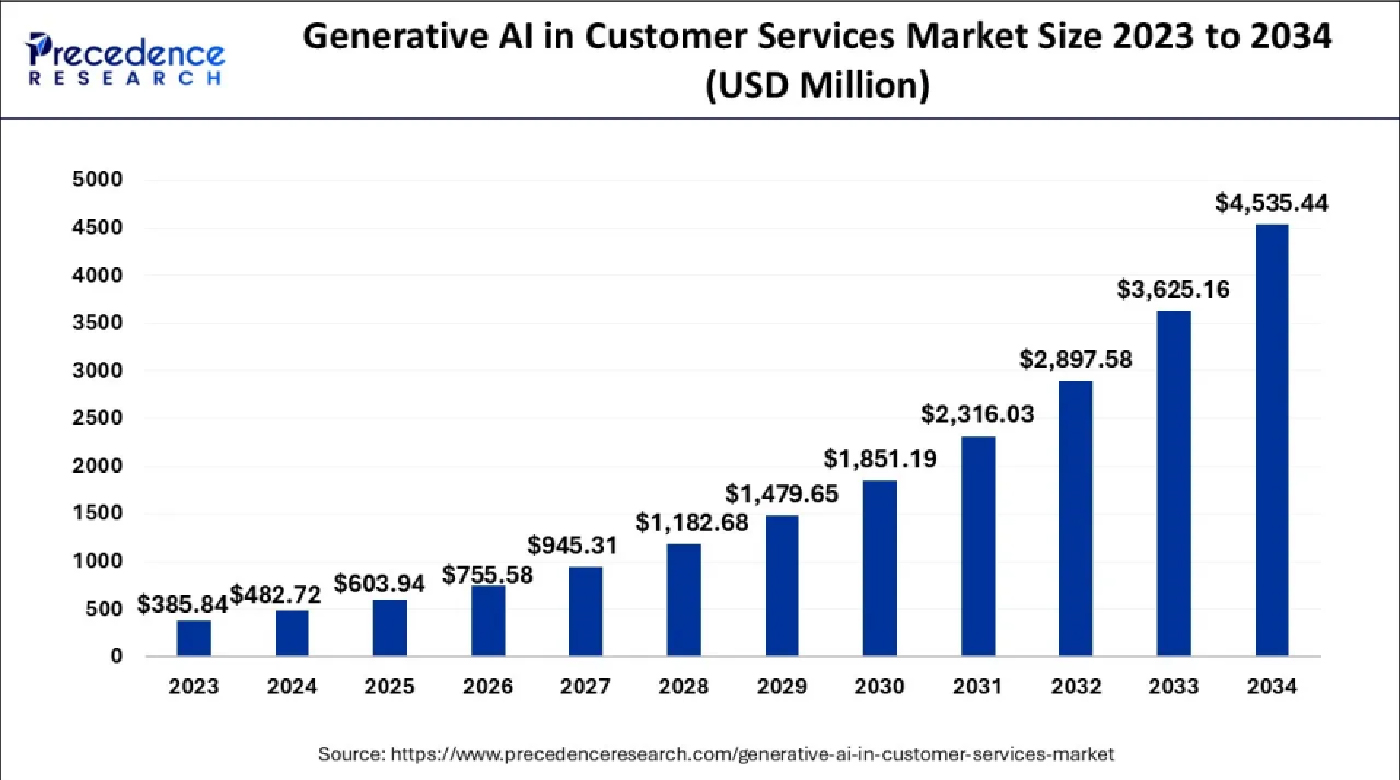
Generative AI is not just a trend; it’s scaling fast. The global generative AI in customer services market is valued at USD 482.72 million and is projected to exceed USD 4,535.44 million by 2034, growing at a CAGR of 25.11%.
This rapid growth shows that AI tools for chat, sentiment analysis, and predictive support are becoming a long-term standard, not a passing experiment.
Getting Started: A Step-by-Step Plan
- Define SMART goals (e.g., cut response time by 30%).
- Audit support flows to spot repetitive tasks AI can automate.
- Choose the right AI tool (chatbots, predictive, or sentiment).
- Train staff to work with AI, not against it.
- Monitor metrics like CSAT, FRT, and cost per ticket.
- Iterate based on performance and customer feedback.
For a deeper breakdown, check this article on How AI Is Enhancing Customer Experience in 2025
Reinventing Customer Service Starts Now
AI isn’t replacing humans; it’s giving them superpowers. By automating routine tasks, predicting problems, and scaling service, AI lets humans do what they do best: build trust and solve complex challenges.
Companies that act now will set the standard for customer service in 2025 and beyond.