


Voice Search Adoption is rapidly growing, and its impact on SEO is becoming impossible to ignore. As we move forward, it’s clear that the rise of voice-activated search devices like Amazon Echo, and Google Home, and smartphone assistants such as Siri has made voice search more mainstream.
According to a Statista Consumer Insights survey from April 2023 to March 2024, Amazon Echo dominates the U.S. smart speaker market, with nearly two-thirds of respondents owning the Alexa-powered device.
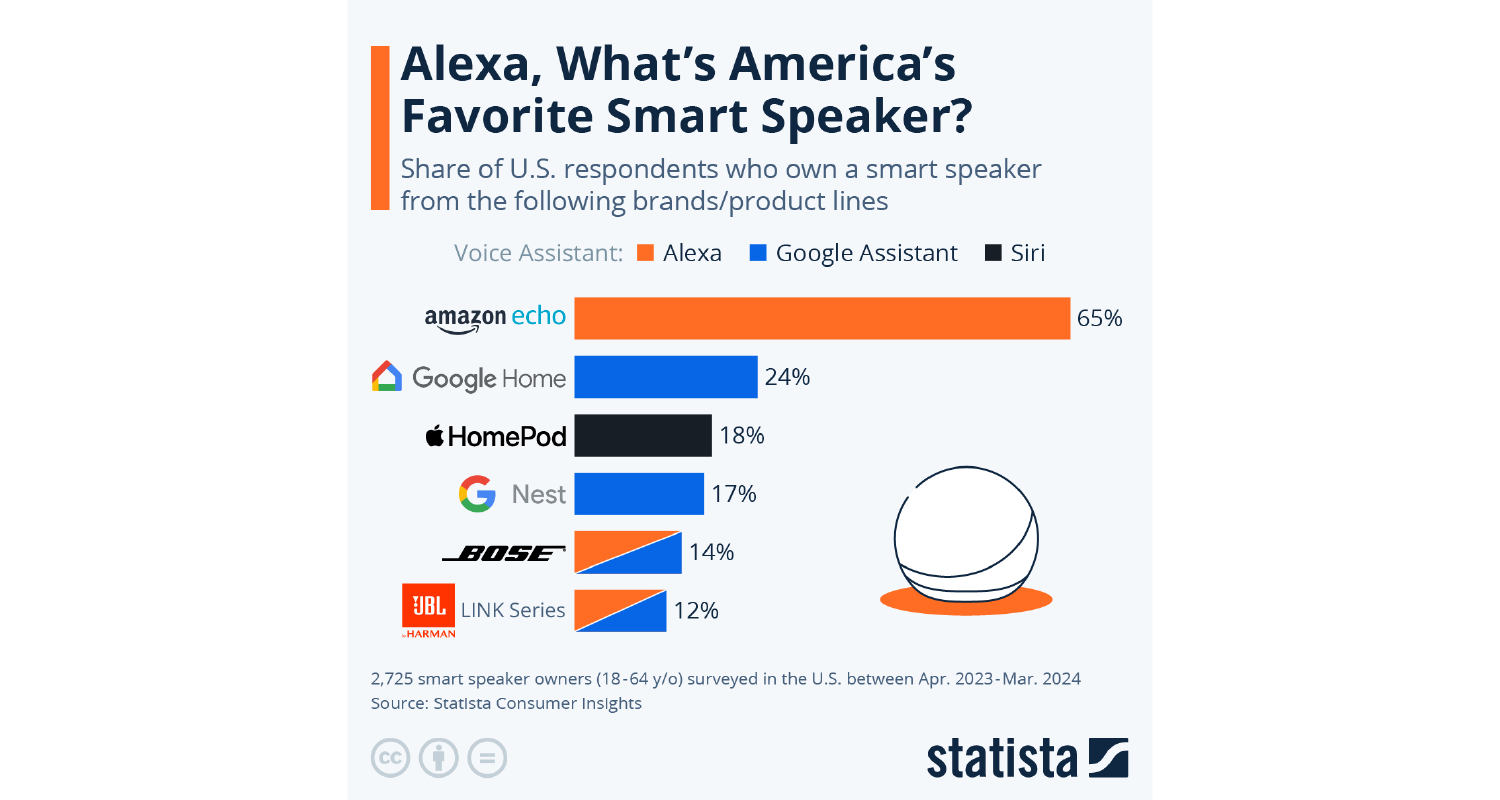
Source: Statista
The Steady Rise of Voice Search
Voice search adoption has grown steadily, particularly as more households adopt smart speakers and virtual assistants. According to Edison Research, approximately 98 million Americans have a smart speaker in their household which continues to grow year over year as voice-controlled devices become more integrated into everyday life.
Consumers are increasingly relying on voice search for quick, hands-free queries, especially in scenarios like driving or cooking. What makes voice search different from traditional text search is the way users phrase their queries. While a person might type “best pizza restaurants Chicago” into a search engine, someone using voice search might say, “What’s the best pizza place near me?” a much more conversational tone. Learn more about Voice Search Optimization: How to Get Started
Why Businesses Should Care About Voice Search
Voice search is not just a passing trend—it’s a crucial part of the future of SEO. One of the main reasons businesses should pay attention to voice search is the shift to natural language processing (NLP). Search engines are getting smarter, focusing on understanding how people speak and the intent behind their searches, rather than just matching specific keywords.
If your business isn’t optimizing for conversational search terms or answering users’ spoken questions, you could miss out on a massive chunk of search traffic. Voice search is especially important for local businesses, as a large percentage of these searches are location-specific queries. In 2024, 56% of smartphone users use voice search to find information about brands and businesses, while only 28% of desktop or laptop users do the same
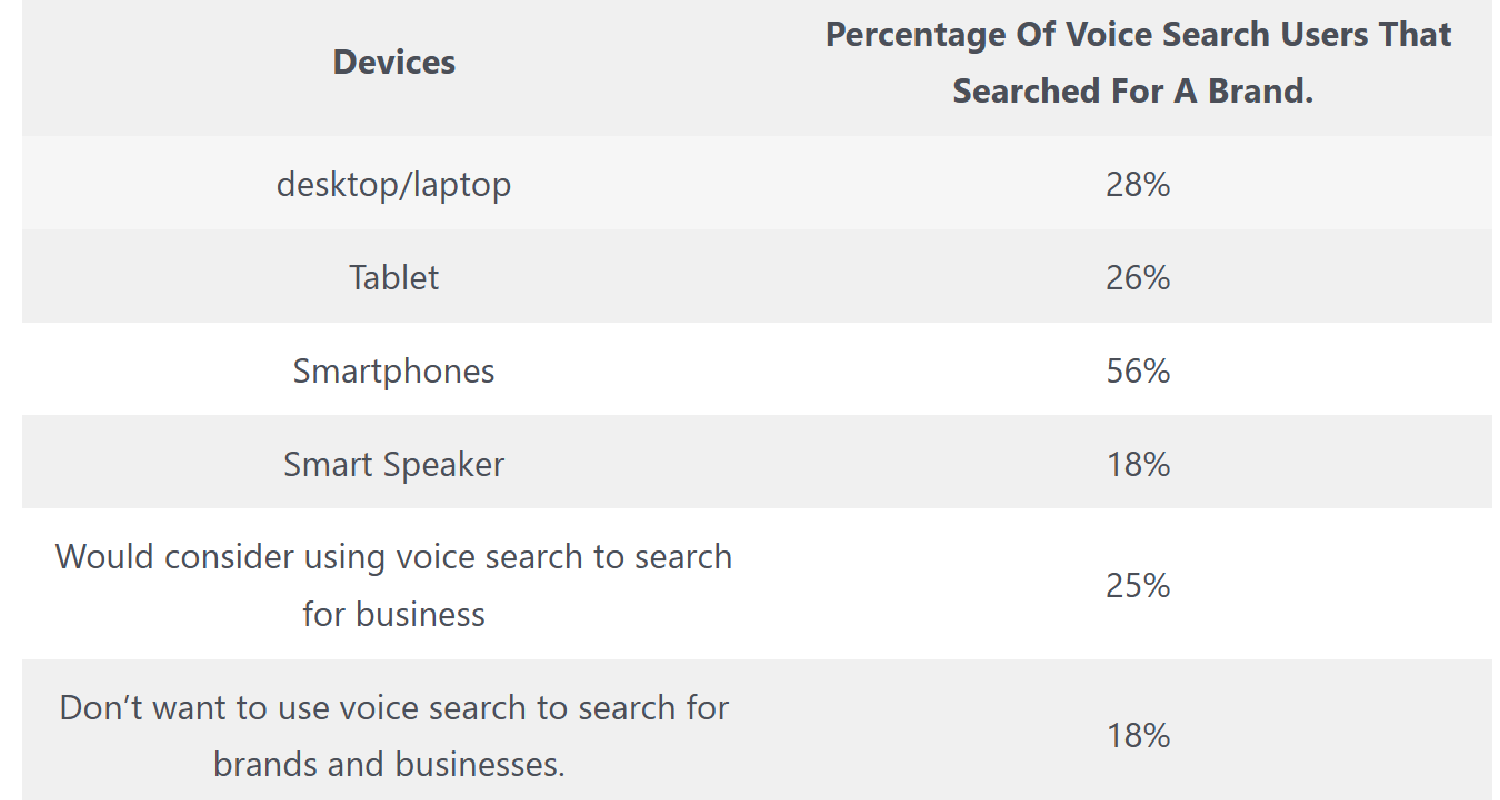
Source: Yaguara
Impact on E-commerce: The Rise of Voice Commerce
Voice search is also making waves in the world of e-commerce. Known as voice commerce, this trend is set to boom in the coming years, with the global voice commerce market projected to reach $326.69 billion by 2028, growing at a compound annual rate of 29.3%. Shoppers are getting more comfortable using voice search to order products, groceries, or even pay bills. For businesses, optimizing your e-commerce platform for voice search is crucial. Product descriptions, meta tags, and site structure should be designed with voice queries in mind.
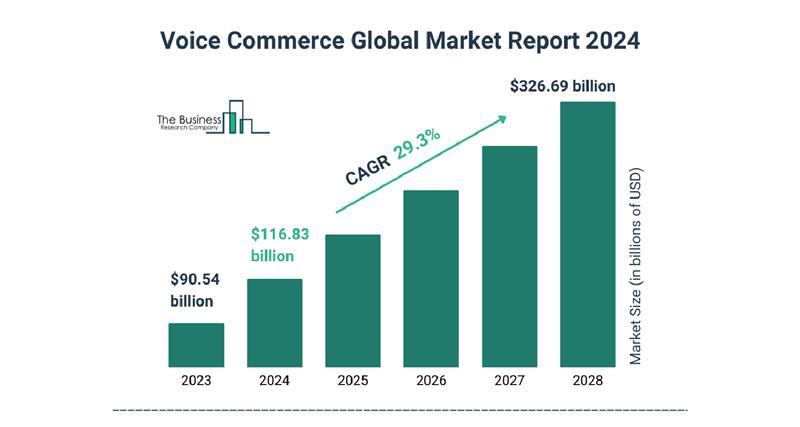
Source: The Business Research Company
Optimizing for Voice Search: Key Strategies
- Long-Tail Keywords: Focus on natural, conversational long-tail keywords instead of just short ones, reflecting how people speak.
- Conversational Content: Craft content that directly answers common questions, using a conversational tone. Queries often start with “who,” “what,” “where,” and “how,” so target these phrases.
- Local Search Optimization: Ensure your business is listed on Google My Business and has ample location-specific content to capture local voice search traffic.
- Mobile Optimization: Since most voice searches occur on mobile devices, make your website mobile-friendly, ensuring fast load times and easy navigation.
- Structured Data: Use structured data markup to enhance the chances of your content appearing in Google Answer Boxes, which voice assistants frequently read aloud.

Source: Google
The Future of Voice Search: What’s Coming?
While the growth of voice search is evident, what’s even more exciting is how it’s evolving. With the rise of Artificial Intelligence (AI) and Natural Language Processing (NLP), voice assistants will only get better at understanding and responding to users’ needs. In addition, multimodal search—where voice search combines with visuals or gestures—is on the horizon, particularly with smart home devices and the Internet of Things (IoT).
Interestingly, younger generations, such as Gen Z and Millennials, are the biggest adopters of voice search, these tech-savvy groups prefer the convenience and speed of voice commands, and businesses that cater to this demographic should consider incorporating voice search into their digital strategies.
Why Voice Search Should Be a Priority in Your SEO Strategy?
Voice search is no longer optional—it’s a must for businesses that want to stay ahead. The convenience, speed, and increasingly human-like interaction offered by voice assistants are making this technology indispensable. By focusing on long-tail keywords, mobile optimization, local SEO, and conversational content, you can position your business to be successful.
If you haven’t started optimizing your site for voice search, now is the time to begin. As more consumers shift to voice-activated search, the businesses that prioritize this trend will see greater visibility, traffic, and engagement.
References
- Statista. (2024). Survey data on smart speaker ownership in the U.S. Retrieved from Statista
- Edison Research. (2024). Smart Speaker Ownership in America. Retrieved from Edison Research
- Yaguara. (2024). Consumer Voice Search Habits. Retrieved from Yaguara
- The Business Research Company. (2024). Voice Commerce Market Size and Growth Forecast. Retrieved from The Business Research Company
- Google. (2024). Best Practices for Optimizing Voice Search. Retrieved from Google Search Central







3 Responses
Best platform I have used in Malaysia so far. The registration process was a breeze and the bonuses are actually fair. Love myminion888.
Really impressed with the payout speed. I didnt expect it to be this fast. Definitely my new favorite place to hang out and play aucasiny1.
I had some trouble finding the right link before but this one is super smooth. Fast loading and easy to get into my account. Definitely the best way to access kg9999login