
Over the past few years, SEO has undergone some major changes, but one of the most impactful has been Google’s move to mobile-first indexing. First announced in 2016 and fully implemented by 2020, this shift means that Google now looks at the mobile version of a website as the primary source for ranking and indexing. By 2024, the implications of this change will have forced businesses and marketers to adapt their SEO strategies in significant ways. This article gets into how mobile-first indexing has changed SEO practices and what steps businesses need to take to keep up.
What is Mobile-First Indexing?
Mobile-first indexing simply means that Google prioritizes the mobile version of your website when determining where it should rank in search results. If you have both a desktop and mobile version of your site, it’s the mobile one that matters most. This shift makes sense, given that 60% of global website traffic now comes from mobile devices. Google’s goal is to provide the best experience for the growing number of mobile users, and so optimizing your site for mobile has become essential.
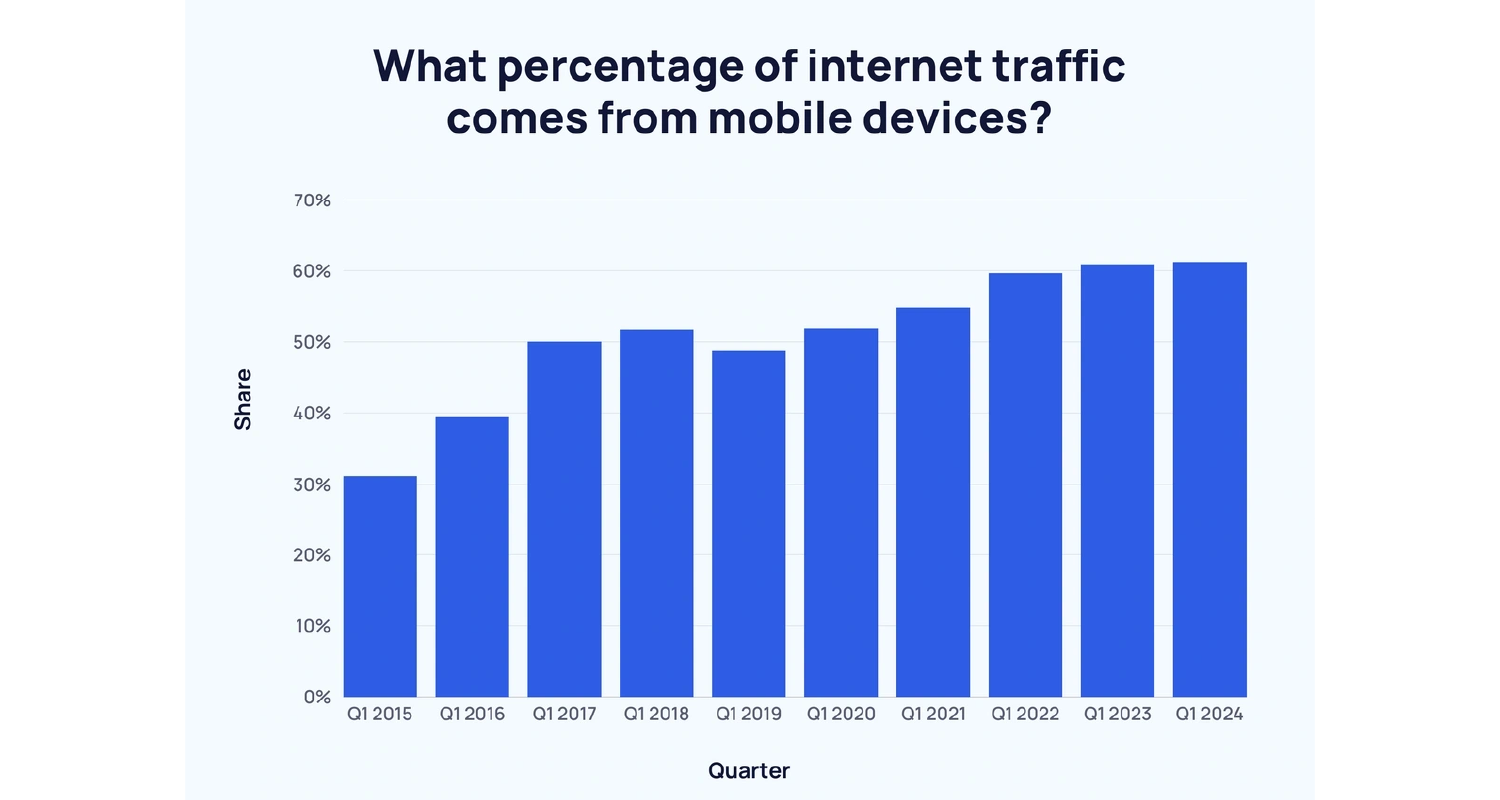
Source: Statista
How Mobile-First Indexing Has Changed SEO
1. Mobile Usability is Critical
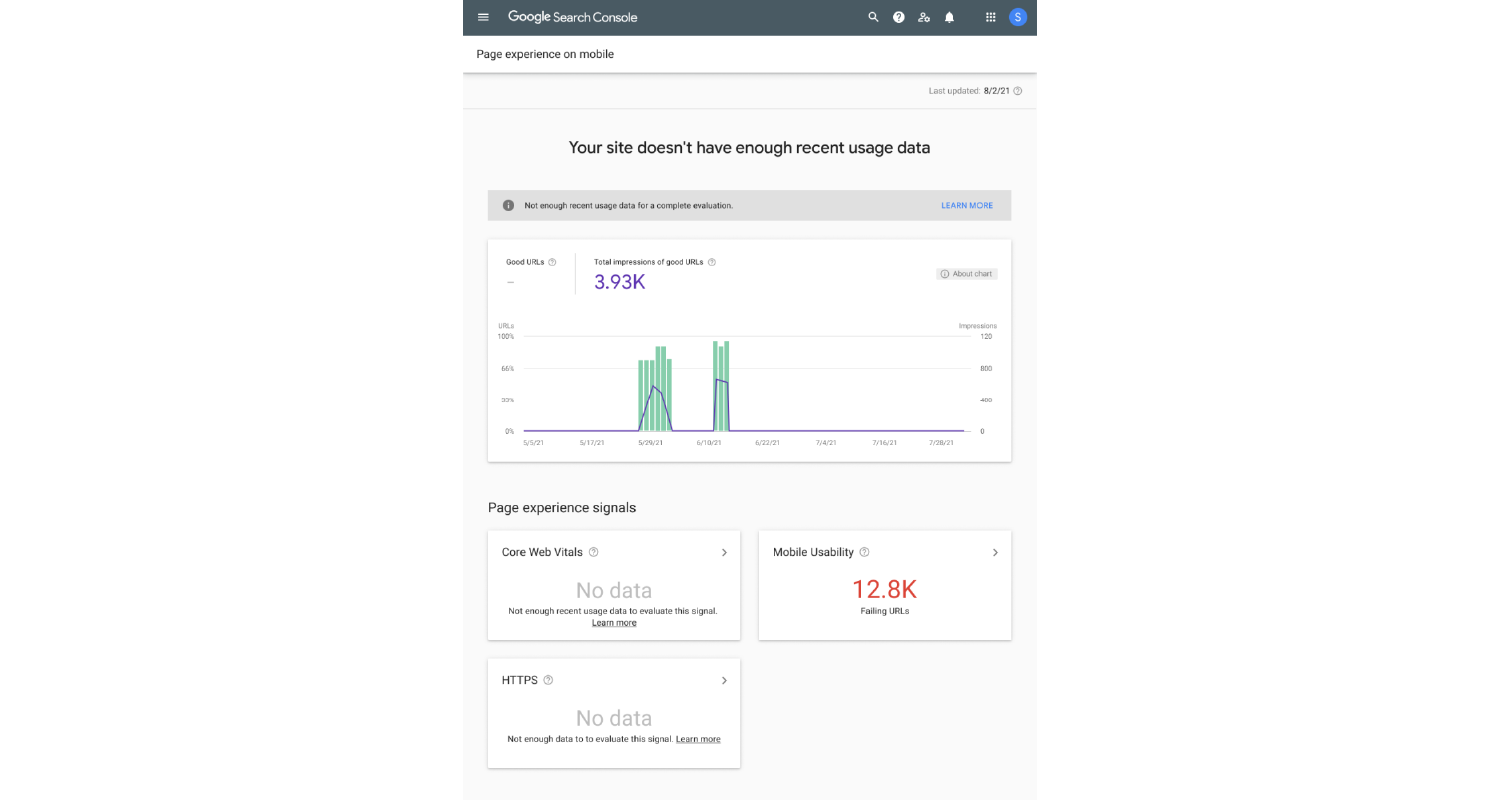
Today, having a mobile-friendly website is a must. If your site doesn’t work well on mobile devices, your search rankings will suffer. Google’s mobile usability test is an important tool for checking if your site meets its standards. Key elements to focus on include responsive design, easy navigation for touch screens, and ensuring text is large enough to read without zooming in.
In addition to mobile usability, Google’s Page Experience update places importance on user-centric metrics known as Core Web Vitals. These measure aspects like load speed, interactivity, and layout stability—specifically on mobile. These metrics play a major role in how your site ranks, making mobile optimization non-negotiable
Source: Developers Google
2. Content Parity is Key
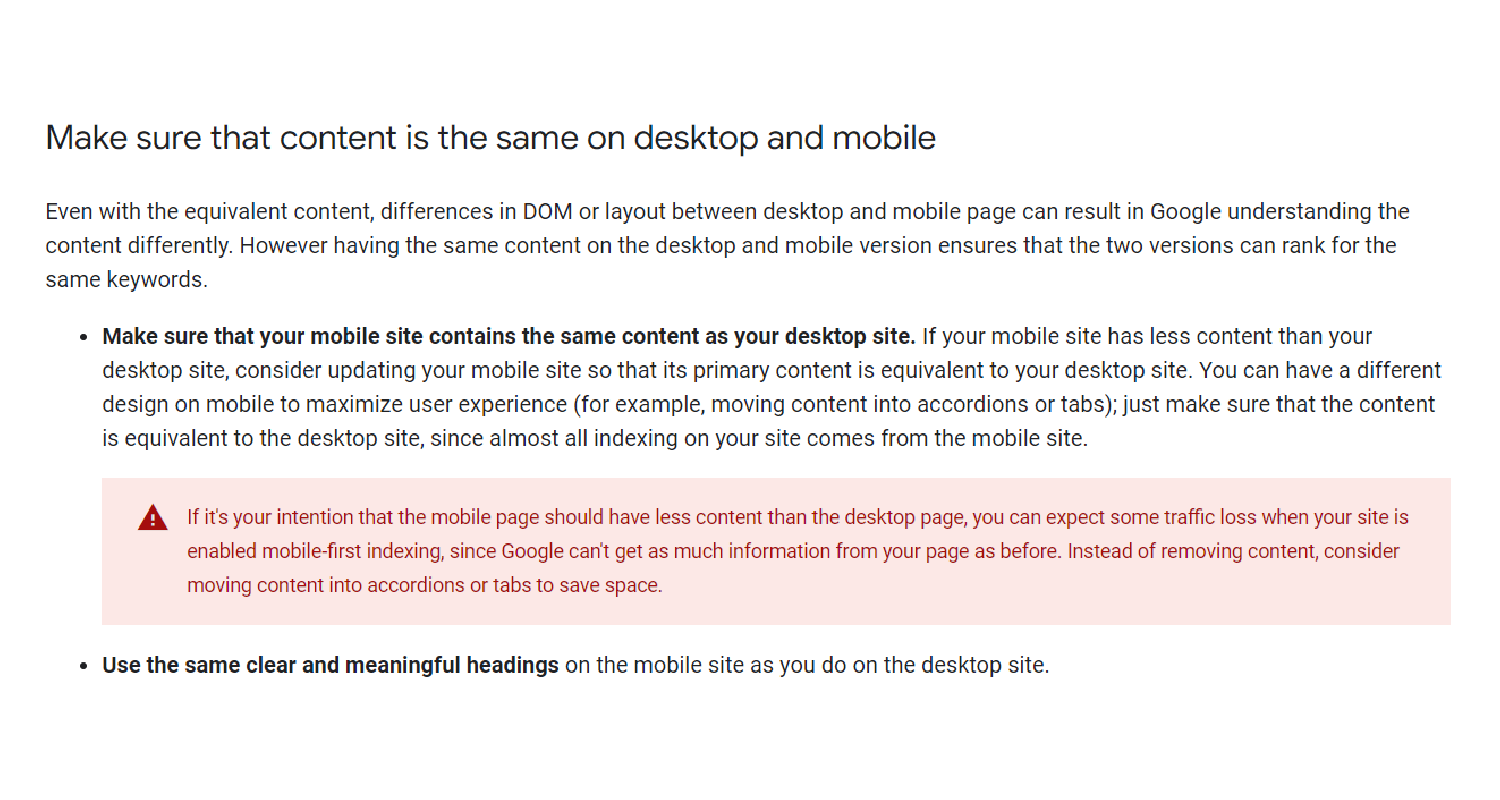
Another important SEO practice is ensuring that the content on your mobile site matches the desktop version. In the past, many websites would slim down their content on mobile, thinking that fewer words or fewer images would help with speed. However, Google’s mobile-first indexing means that if key information, structured data, or metadata is missing from your mobile version, your ranking will take a hit.
As Google’s John Mueller has emphasized, your mobile and desktop sites should offer the same user experience, with identical content, images, alt tags, and metadata like title tags and meta descriptions.
Source: Developers Google
3. Page Speed Matters More Than AMP
At one point, Accelerated Mobile Pages (AMP) were heavily promoted as a way to boost mobile performance. However, AMP is no longer required for content to show up in Google’s “Top Stories” section. That said, mobile site speed remains critical.
Google’s Core Web Vitals—including Largest Contentful Paint (LCP), First Input Delay (FID), and Cumulative Layout Shift (CLS)—are now key factors for measuring mobile performance. To meet these standards, optimizing your images, enabling caching, and using Content Delivery Networks (CDNs) to speed up load times on mobile are essential.
4. Voice Search is Gaining Ground
Voice search is playing an increasingly important role in mobile SEO. 71% of internet users preferred to raise a query through voice search instead of typing in 2023. This trend affects how websites need to be optimized. Voice searches tend to be more conversational, so focusing on natural language and long-tail keywords is important. Structured data is also crucial, as it helps Google understand the context of your content, making it easier to serve accurate results for voice queries.
5. Local SEO and Mobile Go Hand-in-Hand
For businesses with a local presence, optimizing for mobile-first indexing means also focusing on local SEO. A huge number of mobile searches are “near me” searches, which has a direct impact on brick-and-mortar businesses.
According to Google, 76% of people who search for something nearby on their phone visit a related business within a day, and 28% of those searches lead to a purchase. This means keeping your Google Business Profile updated, ensuring NAP (Name, Address, Phone Number) consistency, and optimizing your site for local keywords is essential for attracting mobile users.
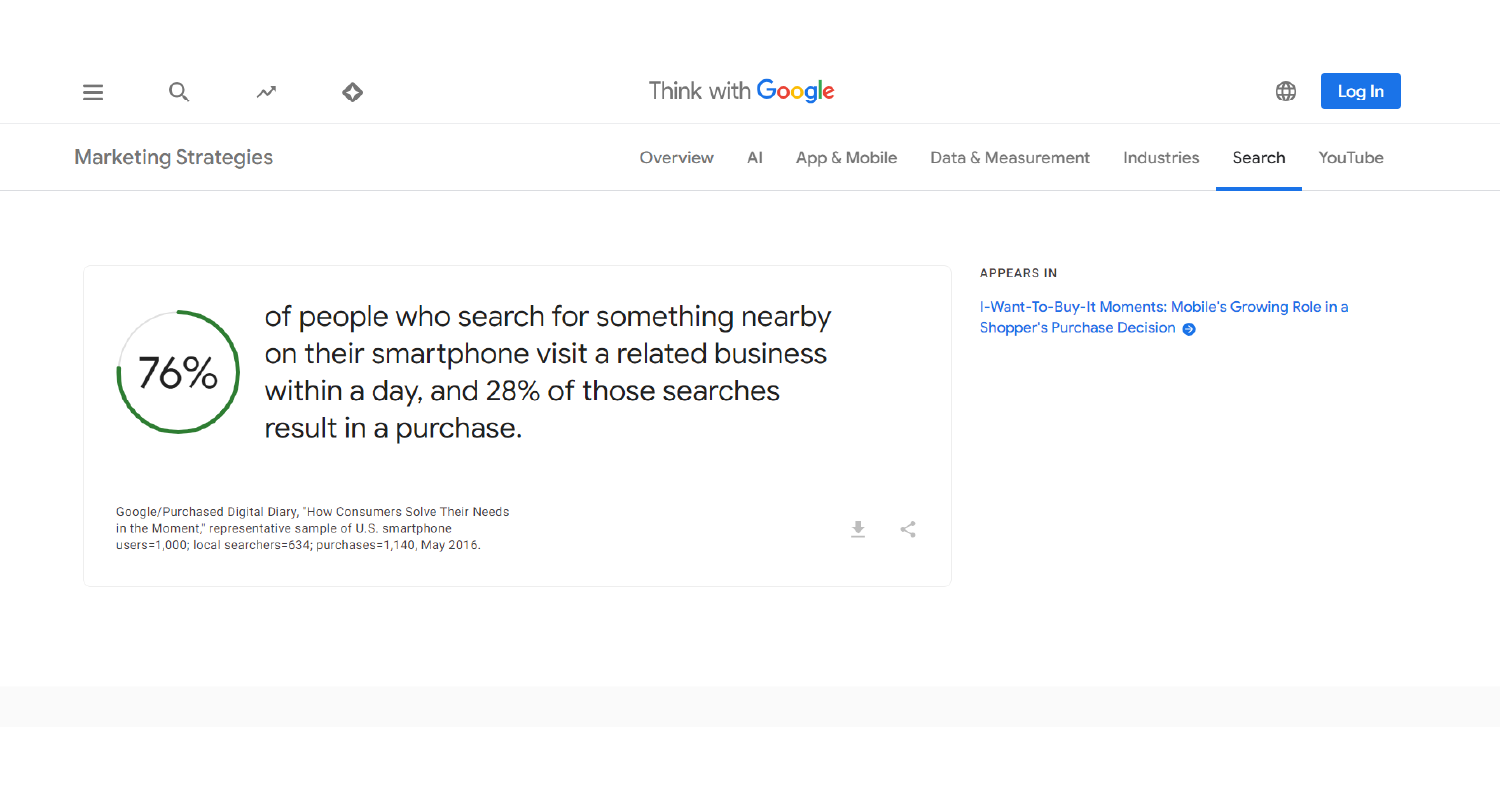
Source: Think With Google
Adapting Your SEO Strategy
1. Prioritize Mobile-First Design
A mobile-first approach to design is more important than ever. This means designing your mobile site first and then adapting it for desktop use, rather than the other way around. With most of your visitors likely coming from mobile devices, ensuring a smooth mobile experience should be a top priority.
2. Speed optimization Is Key
Mobile users expect fast load times, and Google rewards sites that deliver. Optimizing your site’s speed—by compressing images, reducing server response times, and enabling lazy loading—can help improve your rankings and keep visitors engaged.
3. Implement Structured Data
Structured data remains vital for mobile SEO. Using schema markup on your site helps search engines understand your content, making it more likely to appear in rich search results or featured snippets, especially for local or voice searches.
Conclusion
The shift to mobile-first indexing has changed the rules of SEO. Whether it’s making sure your site is mobile-friendly, focusing on content parity, or optimizing for speed and local searches, adapting to these changes is crucial for staying visible in search results. As mobile usage continues to rise, businesses that prioritize mobile-first strategies will be best positioned to succeed.
References
- Google Search Central Blog. (2021). Mobile-first indexing best practices. Retrieved from https://developers.google.com/search/docs/crawling-indexing/mobile/mobile-sites-mobile-first-indexing
- Statista. (2024). Global mobile website traffic as a share of total website traffic from 2011 to 2024. Retrieved from https://www.statista.com/statistics/277125/share-of-website-traffic-coming-from-mobile-devices/
- Google Search Central Blog. (2020). Page experience update and Core Web Vitals. Retrieved from https://developers.google.com/search/blog/2020/11/timing-for-page-experience
- Google Search Central Blog. (2021). Mobile-first indexing best practices. Retrieved from https://developers.google.com/search/docs/crawling-indexing/mobile/mobile-sites-mobile-first-indexing
- Google Search Central. (2024). Core Web Vitals & performance. Retrieved from https://developers.google.com/search/docs/fundamentals/seo-starter-guide/core-web-vitals
- G2. (2023). Voice search statistics: The future of search in 2023 and beyond. Retrieved from https://learn.g2.com/voice-search-statistics
- Think with Google. (2023). The mobile consumer’s path to purchase. Retrieved from https://www.thinkwithgoogle.com/marketing-strategies/search/mobile-near-me-searches/