


Remote work = freedom. But for cybercriminals? It’s an open door.
Since the global WFH shift, attackers have been finding faster, smarter ways to target people, data, and systems, especially through the tools remote teams depend on daily.
Let’s break down how these attacks work, what’s trending in 2025, and how to stay ahead.
🔧 1. Trusted Remote Tools = Attack Surfaces
Attackers are hiding behind tools we use, like AnyDesk, TeamViewer, Quick Assist. These apps are so common in IT support that they fly under the radar. Criminals mimic legit sessions, gain access, and move laterally through the network.
📌 Reported by: TechRadar Pro
🎭 2. Fake IT Support Is a Whole Tactic
Social engineering has gone to the next level. Groups like Scattered Spider impersonate IT help desks to trick employees into giving up credentials. Their social scripts are scary good, fluent English, real employee data, and well-timed attacks.
📌 Source: TechRadar
🛠 3. Infostealers Are on the Rise
Infostealer malware is everywhere. Delivered through phishing, Trojan apps, or cracked software, they silently scrape login data, browser cookies, and even crypto wallets. By 2024, over 2.1 billion credentials were stolen using these tools.
🕵️ 4. North Korea’s Fake Remote Worker Scam
North Korean operatives are applying to remote jobs under fake identities, sometimes using deepfakes to get hired into Western companies. Once inside, they steal IP, implant malware, or route funds to fund weapons development.
📌 More at: Wikipedia
🤖 5. AI-Powered Phishing & Deepfakes
Deepfake video, AI-written phishing, cloned voices, yep, that’s real now. With tools like ChatGPT and open-source voice cloners, attackers personalize scams at a scale. In one 2024 case, a finance exec was duped into sending $20M to a scammer using a fake CEO video.
💥 6. Ransomware-as-a-Service Is Booming
Hackers don’t even need to code anymore. With RaaS kits on the dark web, attacks can be launched in under 90 minutes. And in 2025, we’ve already seen ransomware attacks quadruple vs. two years ago.
📌 Data from: Reddit /r/pwnhub
🔐 7. Credential Theft = Top Malware Goal
According to threat researchers, 24%+ of all malwares now has one job: stealing credentials. Why? Because once they have your login, they don’t need to break in; they just walk through the front door.
📌 Source: Reddit /r/pwnhub
🧩 What Tech Teams Need to Do (Now)
Here’s what experts and vendors are suggesting in 2025:
| 🛡 Tactic | 🚨 Why It Works |
| Zero Trust + AI Behavior Analytics | Blocks access unless identity, device, and behavior all check out. Crucial for hybrid teams. |
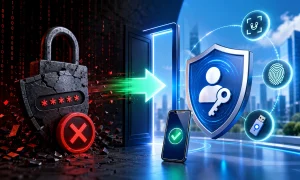
| MFA Everywhere | Biometric + device-level MFA = non-negotiable in 2025. |
| Monitor Remote Access Apps | Block non-approved remote tools; log all sessions. |
| Security Awareness Training | Not once a year, every quarter. Focus on phishing, deepfakes, and impersonation. |
| Vet Remote Hires Deeply | Especially in dev, support, and data-heavy roles. No more resume + Zoom calls only. |
| MDR & SOC as a Service | Mid-size orgs? Consider outsourcing to MDR providers for 24/7 real-time response. |
Remote work isn’t going anywhere, but neither are the attackers. If your security strategy still assumes “perimeter defense” or that everyone’s on your office Wi-Fi, you’re already exposed. Learn more about Securing Remote Work in 2025: Best Practices You Need
Security in 2025 means being remote-native, AI-aware, and obsessed with identity.




2 Responses
Great article!
Are they certified hackers? have they done any certification? I am curious to know.. LOL