Cybercrime is no longer a problem reserved for large enterprises. In 2026, small businesses will become one of the most attractive targets for attackers. Limited budgets, smaller IT teams, and growing reliance on cloud tools make small organisations easier to exploit and more profitable to attack.
What makes today’s threat landscape especially dangerous is that cyberattacks are no longer manual. They are automated, AI-driven, and scalable. A single vulnerability can be discovered and exploited across thousands of businesses within hours.
The good news is that most cyberattacks targeting small businesses are preventable. With the right strategy, tools, and awareness, even lean teams can significantly reduce risk.
This guide explains the biggest cyber threats small businesses face in 2026 and provides practical steps to defend against them. Discover more 2026 Top Cyber Threats
TL; DR: Key Takeaways
- Small businesses are prime targets for ransomware, phishing, and credential theft
- AI-driven attacks are harder to detect but easier to stop with strong fundamentals
- Multi-factor authentication, backups, and training reduce most risks
- Cloud and IoT security are now essential, not optional
- Cybersecurity readiness is about habits, not expensive tools
Why Small Businesses Are Prime Targets in 2026
Attackers follow opportunity, not brand size. Small businesses often lack full-time security staff, advanced monitoring, and formal response plans. This makes them ideal entry points for:
- Financial fraud
- Customer data theft
- Ransomware extortion
- Supply chain infiltration
Many small companies also rely on third-party SaaS platforms, smart office devices, and remote workers. Each of these expands the attack surface.
To understand how attackers exploit weak security foundations, it helps to review the broader threat landscape outlined in Top Cybersecurity Threats Facing Small Businesses in 2026 on Tech News Tips.

1. Defending Against AI-Powered Phishing Attacks
Phishing remains the most common attack method in 2026, but it has evolved. AI now generates emails, messages, and voice calls that mimic real people with frightening accuracy.
Attackers use AI to:
- Clone executive writing styles
- Generate realistic invoices and contracts
- Personalise messages using public data
- Create voice deepfakes for phone scams
How small businesses can defend themselves:
- Use email filtering with AI-based threat detection
- Require multi-factor authentication for all logins
- Train employees to verify unusual requests through a second channel
- Establish internal approval processes for payments and data sharing
Most phishing attacks fail when employees pause and verify instead of reacting quickly.
2. Protecting Against Ransomware and Data Extortion
Ransomware is still the most damaging cyber threat for small businesses. In 2026, attackers increasingly combine encryption with data theft, threatening to leak sensitive information even if systems are restored.
Ransomware commonly enters through:
- Phishing emails
- Unpatched software
- Compromised remote desktop access
- Infected third-party plugins
Practical defenses that work:
- Maintain offline and immutable backups
- Patch operating systems and software regularly
- Disable unnecessary remote access services
- Use endpoint detection tools on all devices
Backups remain the single most effective ransomware defense. If attackers cannot lock your data, their leverage disappears.
3. Securing Cloud Accounts and SaaS Platforms
Small businesses rely heavily on cloud services for email, accounting, file storage, and collaboration. These platforms are frequent targets due to weak identity controls.
Common cloud security issues include:
- Reused passwords
- Over-privileged user accounts
- Unsecured API keys
- Lack of activity monitoring
Steps to secure cloud environments:
- Enforce multi-factor authentication everywhere
- Limit user access to only what is necessary
- Review account permissions quarterly
- Monitor login activity and alerts
Cloud breaches often start with stolen credentials. Strong identity protection prevents most of them.
4. Managing Supply Chain and Vendor Risks
Attackers increasingly target small businesses as a way into larger organisations. If your company provides services, software, or data access to others, you are part of a supply chain.
Supply chain attacks often exploit:
- Shared credentials
- Unpatched vendor software
- Compromised updates
- Excessive third-party access
How to reduce vendor risk:
- Review vendor security practices before onboarding
- Limit third-party access permissions
- Remove unused integrations
- Track who has access to sensitive systems
For businesses using connected devices or smart systems, vendor risk management is especially important. This is covered in more depth in Developing an IoT Security Strategy: Key Considerations on Tech News Tips.
5. Securing Smart Office and IoT Devices
Smart cameras, door locks, thermostats, printers, and voice assistants are now common in small offices. Unfortunately, many of these devices ship with weak default settings.
IoT risks include:
- Default passwords
- Outdated firmware
- Poor network isolation
- Lack of monitoring
Basic IoT security steps:
- Change default passwords immediately
- Update firmware regularly
- Place IoT devices on separate networks
- Disable unused features
IoT security failures can expose internal networks and customer data without triggering traditional security alerts.
6. Preventing Credential Theft and Account Takeovers
Stolen credentials remain one of the easiest ways for attackers to gain access. In 2026, automated tools can test billions of leaked passwords in minutes.
High-risk behaviours include:
- Password reuse
- Shared accounts
- Weak or short passwords
- No MFA
How to protect accounts effectively:
- Require strong, unique passwords
- Use password managers
- Enable MFA on all systems
- Eliminate shared logins
Credential hygiene is one of the highest return investments a small business can make.
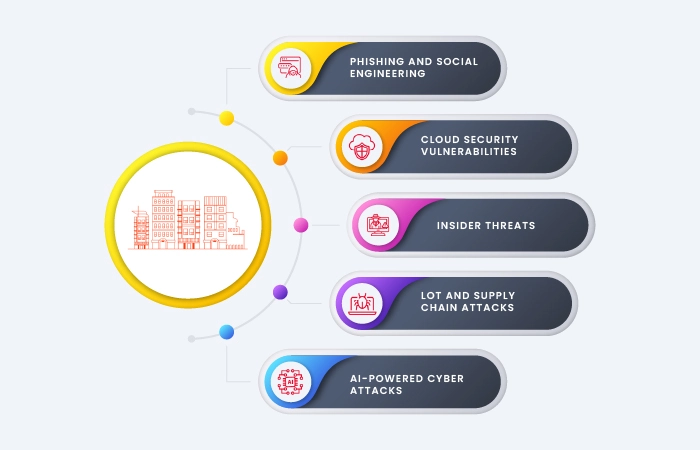
7. Addressing Insider Threats and Human Error
Not all threats are external. Many breaches result from mistakes made by employees, contractors, or partners.
Common issues include:
- Clicking malicious links
- Using personal devices without protection
- Uploading data to unsecured platforms
- Misconfiguring systems
Mitigation strategies:
- Provide regular security training
- Create clear reporting channels
- Restrict administrative privileges
- Monitor unusual behaviour patterns
Security awareness transforms employees from a risk into a defense layer.
8. Building a Simple Incident Response Plan
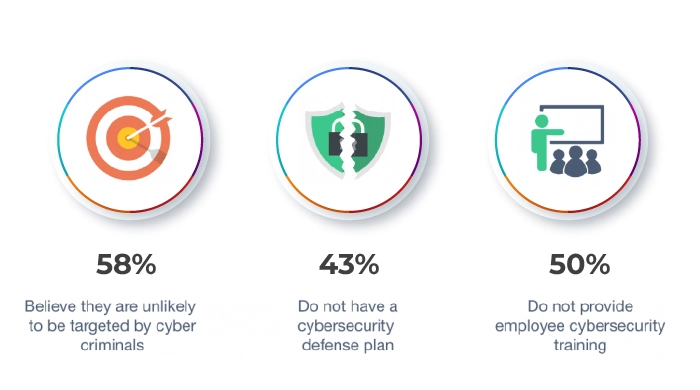
Small businesses often lack formal response plans. This causes panic, delays, and greater damage during incidents.
An effective plan should answer:
- Who investigates incidents
- How systems are isolated
- When customers are notified
- How operations are restored
Documenting even a basic plan dramatically reduces response time and confusion.
9. Aligning Security With Compliance Requirements
Regulatory expectations are rising globally. Even small businesses must now consider data protection, breach reporting, and security controls.
Key frameworks influencing small businesses include:
- NIST Cybersecurity Framework
- GDPR and CCPA
- Regional data protection laws
Recent breaches have shown that compliance must reflect real security practices. This shift is explored further in How to Use AI to Enhance Data Privacy: Tools and Techniques on Tech News Tips.
10. Creating a Cybersecurity Culture, Not Just Controls
Technology alone does not stop cybercrime. Culture matters just as much.
Strong cybersecurity cultures share common traits:
- Leadership takes security seriously
- Employees feel safe reporting mistakes
- Security is discussed regularly
- Processes are simple and realistic
When security becomes part of daily operations, attacks become much harder to execute.
The 2026 Cybersecurity Outlook for Small Businesses
Cyber threats will continue to evolve, but most attacks will still rely on the same weaknesses: poor passwords, untrained users, unpatched systems, and weak identity controls.
Small businesses that focus on fundamentals will outperform those chasing complex tools without strong foundations.
Cybersecurity in 2026 is not about fear. It is about readiness, discipline, and consistency.
Final Insight: Small Businesses Can Win This Fight
Small businesses may not have enterprise budgets, but they do not need them to be secure. By focusing on identity protection, backups, training, and vendor management, most cyber threats can be neutralised before damage occurs.
Cybersecurity is no longer optional. But it is absolutely manageable.
The businesses that invest in resilience today will be the ones still standing tomorrow.
External References
- Cybersecurity & Infrastructure Security Agency (CISA)
https://www.cisa.gov - National Institute of Standards and Technology (NIST) Cybersecurity Framework
https://www.nist.gov/cyberframework - European Union Agency for Cybersecurity (ENISA)
https://www.enisa.europa.eu - IBM Security: Cost of a Data Breach Report
https://www.ibm.com/security/data-breach - Verizon Data Breach Investigations Report (DBIR)
https://www.verizon.com/business/resources/reports/dbir/