Cybersecurity is no longer something small businesses can afford to ignore. In 2026, attackers are shifting their focus from big corporations to smaller companies because they often lack advanced security tools, structured processes, or dedicated IT teams. For cybercriminals, small businesses are the easiest route into valuable financial data, customer records, and supply chains.
This guide breaks down the biggest threats small companies face in 2026 and explains how to reduce risks before they turn into expensive incidents.
TL; DR: Quick Takeaways
- Small businesses are now prime targets for ransomware groups
- Social engineering is more sophisticated than ever.
- AI-driven attacks can bypass outdated security systems.
- Weak passwords and old software remain top vulnerabilities.
- Zero trust, MFA, and employee training offer the strongest protection.
Why Small Businesses Face Higher Cyber Risk in 2026
Large companies have full security operations teams. Small businesses often rely on a few tools, basic firewalls, and reactive troubleshooting. Attackers know this gap exists and use it to their advantage. (cisa.gov)
Cyberattacks today are automated, scalable, and extremely cheap for hackers to launch. Even a small restaurant, online shop, or consultancy can be hit with ransomware that halts operations instantly.

1. AI-Powered Phishing and Social Engineering
Phishing emails used to be easy to spot. In 2026, attackers use AI to generate ultra-realistic messages that mimic tone, writing style, and branding. (IBM)
Small businesses are targeted because:
- They often lack email filtering tools
- Employees do not receive regular security training.
- Attackers impersonate suppliers or customers easily.
AI voice cloning is also making phone-based scams more convincing. Hackers can imitate a CEO’s voice to approve payments or request credentials.
Learn More in How to Use AI to Enhance Data Privacy: Tools and Techniques.
2. Ransomware Attacks on Cloud-Based Systems
Ransomware remains the number one threat to small businesses. In 2026, attackers are focusing on:
- Cloud file storage
- Point of sale systems
- Small ecommerce sites
- Accounting and payroll platforms
Instead of encrypting only local files, new ransomware strains target synced cloud folders and backups, making recovery harder. (enisa.europe)
Impact can include:
- Days or weeks of business downtime
- Data loss and corrupted backups
- Legal penalties
- Reputational damage
3. Supply Chain Attacks Targeting Small Vendors
Hackers no longer attack large companies directly. They look for ways through their smaller partners, suppliers, or outsourced services.
For example, if a small marketing agency manages access to a client’s website or data, a single compromised device can give attackers full entry.
Supply chain attacks spread through:
- Shared credentials
- Compromised third-party tools
- Vulnerable plugins or software
- Infected updates from vendors
Learn more in How Cybercriminals Are Exploiting Remote Work Trends.
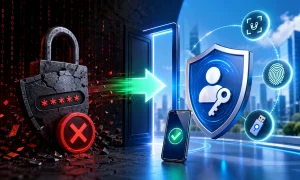
4. Weak Password Practices and Reused Credentials
One of the biggest ongoing risks is simply poor password hygiene.
Common small business issues:
- Shared passwords across teams
- Old credentials never changed.
- Password reuse across platforms
- No multi-factor authentication
- Credentials stored in unsecured notes or spreadsheets
In 2026, AI-powered brute-force attacks can crack simple passwords in seconds. (nist.gov)
5. Outdated Software and Unpatched Systems
Small businesses often delay updates because they fear downtime or compatibility problems. Attackers take advantage of these gaps.
High-risk areas include:
- Old versions of WordPress
- Unpatched POS systems
- Legacy CRM or inventory tools
- Unsupported operating systems
A single missed update can open the door to malware, credential theft, or botnet takeover.
6. IoT Vulnerabilities in Smart Offices
Smart locks, thermostats, IP cameras, and even coffee machines can be exploited if they are not secured properly. Many IoT devices have weak default passwords or outdated firmware.
To understand how IoT devices should be secured in modern environments, see Developing an IoT Security Strategy: Key Considerations on Tech News Tips.
7. Business Email Compromise (BEC)
BEC attacks trick employees into sending money or sensitive information to attackers. In 2026, these scams use AI to craft messages that look identical to real internal communications.
Common BEC patterns:
- Fake invoice requests
- Urgent payment transfers
- Impersonation of executives
- Notifications about fake mergers or policy changes
BEC remains one of the most financially damaging cyber threats for small businesses.
8. Insider Threats and Employee Negligence
Not all threats come from outside.
Employees can unintentionally expose data by:
- Clicking on malicious links
- Using personal devices for work
- Downloading unverified software
- Mishandling customer data
Intentional insider threats, such as disgruntled employees, also pose serious risks.
9. Fraud and Fake Online Orders Targeting SMEs
Small ecommerce shops and service businesses are increasingly targeted by:
- Stolen credit cards
- Fake refund claims
- Bot-driven order testing
- Chargeback fraud
Without fraud detection tools, many SMEs absorb heavy financial losses.
10. Lack of Cybersecurity Awareness Training
Even with good tools, untrained employees leave huge gaps. Most cyber incidents begin with human mistakes.
Training should cover:
- Safe email habits
- Password best practices
- How to spot phishing attempts
- How to report suspicious behaviour
- Risks of public WiFi
Cybersecurity training is one of the highest ROI protections for small businesses.
Practical Ways Small Businesses Can Protect Themselves in 2026
1. Implement MFA everywhere
This stops the majority of automated attacks.
2. Adopt a Zero Trust model
Never assume a user or device is safe by default.
3. Set up automated backups
Store them offline to avoid ransomware encryption.
4. Update software regularly
Schedule updates during low traffic hours.
5. Use password managers
Eliminate weak or shared passwords.
6. Secure all IoT devices
Change default passwords and enable automatic updates.
7. Train employees every quarter
Awareness is your first line of defense.
The 2026 Outlook: Threats Will Get Smarter
Cybercriminals are using automation, AI, and inexpensive tools that make attacks faster and easier to launch. Small businesses that continue relying on outdated practices will remain at the easiest targets.
But businesses that develop strong security habits, adopt modern tools, and train their teams can significantly reduce their risk.
Cybersecurity is not about fear. It is about readiness.
Small businesses that invest early will be the ones that stay resilient, trustworthy, and competitive in 2026 and beyond.