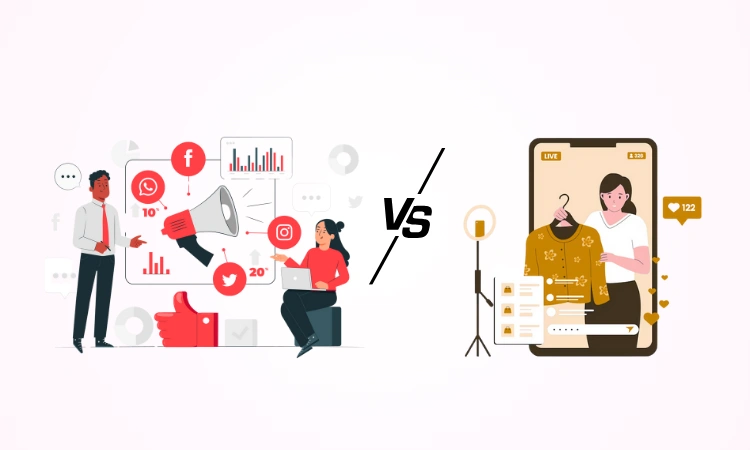
Businesses looking to maximize online revenue often face a key question: Should they invest in affiliate marketing or influencer marketing? Both strategies can drive sales, but they work in different ways and suit different goals. Let’s break down the differences and advantages between Affiliate Marketing vs Influencer Marketing, and decide which one delivers better results depending on your business needs.
Affiliate Marketing: Performance-Based Revenue Generation
How It Works
Affiliate marketing is a performance-based model where businesses pay commissions to affiliates for driving sales or leads. Affiliates promote products through blog posts, websites, email marketing, and social media, earning a percentage of each sale generated through their unique tracking links. What Is Affiliate Marketing and How to Get Started
Pros of Affiliate Marketing
✔ Cost-effective: You only pay for actual conversions (sales, leads, or clicks).
✔ Scalable: A broad network of affiliates can drive long-term passive revenue.
✔ Diverse promotion channels: Affiliates use blogs, SEO, PPC, email marketing, and social media.
✔ Low upfront costs: Unlike influencer marketing, there’s no need for hefty upfront payments. Learn more about "Affiliate Marketing Strategies for Beginners: A 2025 Guide"
Cons of Affiliate Marketing
✖ Slow initial growth: Building a network of effective affiliates takes time.
✖ Limited control over branding: Affiliates may present your product differently than intended.
✖  Risk of fraud: Some affiliates may use shady tactics like cookie stuffing or misleading ads.
Who Should Use It?
Affiliate marketing is ideal for eCommerce brands, SaaS companies, and businesses looking for long-term, performance-driven sales growth with low upfront investment.
Influencer Marketing: Leveraging Trust for Immediate Impact
How It Works
Influencer marketing involves partnering with social media personalities who promote your brand to their followers. Influencers can create sponsored posts, product reviews, and brand collaborations to generate awareness and sales. What Is Influencer Marketing? How to Develop Your Strategy
Pros of Influencer Marketing
✔ Fast brand exposure: Influencers have an established audience ready to engage.
✔ Authenticity and trust: Followers view influencer recommendations as personal endorsements.
✔ Strong engagement: Content gets likes, comments, and shares, boosting visibility.
✔ Creative storytelling: Influencers bring a fresh perspective to product promotion.
Cons of Influencer Marketing
✖ High costs: Top-tier influencers charge thousands of dollars per post.
✖ Uncertain ROI: Measuring direct sales impact can be challenging.
✖ Brand risk: If an influencer faces backlash, it can reflect poorly on your brand.
✖ Short-lived impact: Unlike affiliate links, posts have limited visibility after the initial hype.
Who Should Use It?
Influencer marketing works best for brand awareness campaigns, product launches, and lifestyle brands that rely on social proof and engagement.
Affiliate Marketing vs Influencer Marketing: Key Differences
| Factor | Affiliate Marketing | Influencer Marketing |
|---|---|---|
| Payment Model | Commission-based | Upfront fees or sponsorships |
| Best For | Sales & conversions | Brand awareness & engagement |
| Cost Structure | Pay-per-sale or lead | Fixed or variable per post |
| Longevity | Long-term passive income | Short-term visibility |
| Control | Less control over branding | More curated partnerships |
| Trust Factor | Relies on SEO & content marketing | Relies on influencer credibility |
Which One Drives Better Results?
The best choice depends on your business goals:
For immediate exposure and engagement: Go with influencer marketing to tap into an audience that already trusts the influencer.For long-term, scalable revenue: Choose affiliate marketing, where costs align with actual performance.bFor maximum impact: Use both strategies. An influencer can generate initial buzz, while affiliate marketing sustains ongoing conversions.
Which One is Better?
Neither strategy is outright better than the other, they serve different purposes. Brands that need quick, high-visibility campaigns will benefit from influencer marketing. Those seeking sustainable, cost-effective conversions should focus on affiliate marketing. Smart businesses often combine both approaches for a well-rounded marketing strategy that maximizes reach and revenue.
Which strategy has worked best for your brand? Let’s discuss in the comments!