Email marketing isn’t what it used to be. Gone are the days of generic, one-size-fits-all messages that get lost in a sea of unread emails. In 2025, AI-driven hyper-personalization is taking over, giving customers emails that feel like they were written just for them.
From predicting the perfect send time to crafting subject lines tailored to an individual’s behavior, AI is reshaping how businesses engage with their audience.
And the results? Higher open rates, stronger customer loyalty, and a serious boost in revenue. Let’s dive into Hyper-Personalized Email Campaigns
Personalization: From Basic to Brilliant
Remember when email personalization meant adding someone’s first name to the subject line? Good, but not revolutionary.
Now, AI digs into real-time data, analyzing browsing habits, purchase history, and even the weather to create emails that matter to the recipient.
With nearly 10 billion emails sent daily in the U.S. alone, standing out is a challenge. AI is the secret weapon, ensuring each email feels less spam and more like a personal conversation. For example, an AI-powered system can:
- Send emails at the exact time the recipient is most likely to open them.
- Generate subject lines based on past interactions.
- Recommend products based on real-time browsing behavior.
According to Shopify, 39% of email marketers believe AI-driven hyper-personalization will be the biggest change in email automation.
Real-World Wins: AI in Action
Fast Food Gets Smarter
Yum Brands (parent company of Taco Bell, Pizza Hut, and KFC) recently used AI to personalize email offers based on:
- Time of day
- Day of the week
- Past purchases
- Subject line effectiveness
Instead of blasting out the same coupon to everyone, they sent tailored deals to different customer segments. The result? Double-digit growth in engagement and sales. As Joe Park, Yum’s chief digital and technology officer, put it in an interview with The Wall Street Journal, this AI-driven approach has “the potential to greatly improve” marketing ROI.
How AI Is Changing Email Marketing
Smarter Segmentation & Dynamic Content
Traditional email segmentation is basic, grouping people by age, gender, or location. AI, on the other hand, looks at deeper behavioral patterns and even psychographics (interests, values, lifestyle choices). This means two people in the same city, with the same demographics, could receive completely different emails based on what interests them.
Tools like Mailtrap are leading this shift, helping marketers test different subject lines, formats, and messaging through AI-powered automation.
Automation & Real-Time Adaptability
AI isn’t just saving marketers time, but it’s making email campaigns faster and smarter.
- If a customer is browsing a website during a sale, AI can trigger an email in real-time.
- If an item they viewed goes out of stock, an email can suggest similar products.
- If prices drop, AI can notify interested customers automatically.
Plus, reinforcement learning means AI doesn’t just automate but learns and improves over time, adjusting campaigns based on real-time feedback.
Generative AI: Your New Email Copywriter
Feeling stuck on email content? ChatGPT, Gemini, and Claude can generate personalized emails in seconds. These tools help marketers:
- Draft engaging email copy.
- Create multiple variations for A/B testing.
- Even generate custom images and graphics that match the campaign theme.
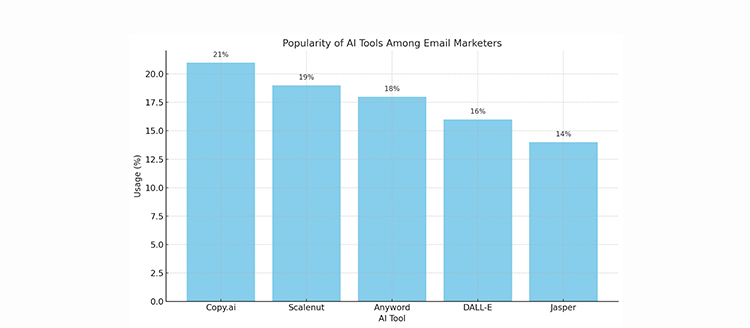
A recent article on Mailtrap’s blog highlighted that AI-driven email campaigns have shown significant improvements in both open rates and click-through rates by using generative AI for content creation. According to Artsmart.ai, AI-enhanced email marketing has boosted click-through rates by 13% compared to traditional campaigns.
What’s Next? Email Trends to Watch in 2025
1. Predictive Personalization
AI is getting even better at predicting what customers want before they even know it. By analyzing behavior, it can suggest products or services before a need arises, leading to higher conversions.
2. Voice-Activated Emails
With Alexa, Siri, and Google Assistant becoming smarter, we may soon see emails that can be read aloud and responded to with voice commands. This hands-free approach could be especially useful for busy professionals and those on the go.
3. Interactive & Immersive Emails
Expect more embedded polls, quizzes, carousels, and AR-powered product demos inside your inbox. Soon, we can expect even richer multimedia experiences, including embedded video content and AR-powered product demos. These will allow consumers to interact with products before clicking through a website.
4. Privacy-First Email Marketing
As consumers become increasingly conscious of data privacy and environmental sustainability, marketers will need to adopt ethical practices. This means transparent data policies and eco-friendly email designs that minimize digital waste. Compliance with regulations like GDPR and CCPA will remain a top priority.
5. Seamless Omnichannel Integration
Email marketing will no longer exist in isolation. It will connect more smoothly with social media, SMS, and AR/VR platforms to create a unified brand experience. Learn more about Why Email Newsletters Are Making a Strong Comeback in 2025
Industry Leaders Setting the Bar
Klaviyo: AI-Powered Growth
As a Shopify partner, Klaviyo is investing heavily in AI for hyper-personalized emails. Their latest financials show:
- 50% increase in adjusted earnings
- 35% boost in sales
AI-driven email campaigns are a profit-driving machine.
Mailchimp + Canva: A Creative Edge
Mailchimp’s expanded partnership with design platform Canva shows how collaboration is key to maintaining brand consistency and engaging design aesthetics in email campaigns. Through a new partnership with Canva, Mailchimp users can seamlessly integrate beautifully designed assets into their emails.
great visuals + personalization = more engagement.
The Challenges Ahead
Not everything about AI-driven email marketing is sunshine and rainbows. Cybersecurity experts warn that hyper-personalized scams are on the rise, with AI helping fraudsters craft convincing phishing emails. Marketers will need to double down on authentication and security measures.
And then there’s data privacy. AI thrives on customer data, but consumers are increasingly wary of how their information is used. Transparency and ethical data practices will be key to maintaining trust.
Balancing Automation with a Human Touch
Even with advanced AI, the human element remains vital. Brands must strike a balance between automation and maintaining a genuine connection with their audience. After all, consumers still appreciate a friendly, human tone in communications.
The Future Is Here
The rise of hyper-personalized email campaigns using AI marks a transformative era in digital marketing. With tools that craft dynamic content, optimize send times, and predict customer needs, brands that embrace AI are seeing higher engagement, better conversions, and increased revenue.
Embracing AI-driven hyper-personalization is a necessity for brands that wish to remain competitive in a crowded digital landscape. Marketers who want to stay ahead should start investing in AI-driven email strategies now. Because in 2025, generic emails aren’t just ineffective, they’re obsolete.