
AI in data privacy means using artificial intelligence to protect personal information by detecting risks, hiding sensitive details, and processing data securely. Techniques like differential privacy, federated learning, and confidential computing allow organizations to use data safely while staying compliant with regulations.
If you handle customer data, personal records, or even just everyday digital files, you know privacy matters. The good news: Artificial Intelligence (AI) is not just for chatbots and automation. It can actively protect your data if you use it the right way.
Here are six practical ways you can put AI to work for stronger privacy. Learn more How AI Improves Data Privacy and Protection?
1. Use Differential Privacy to Hide Personal Details
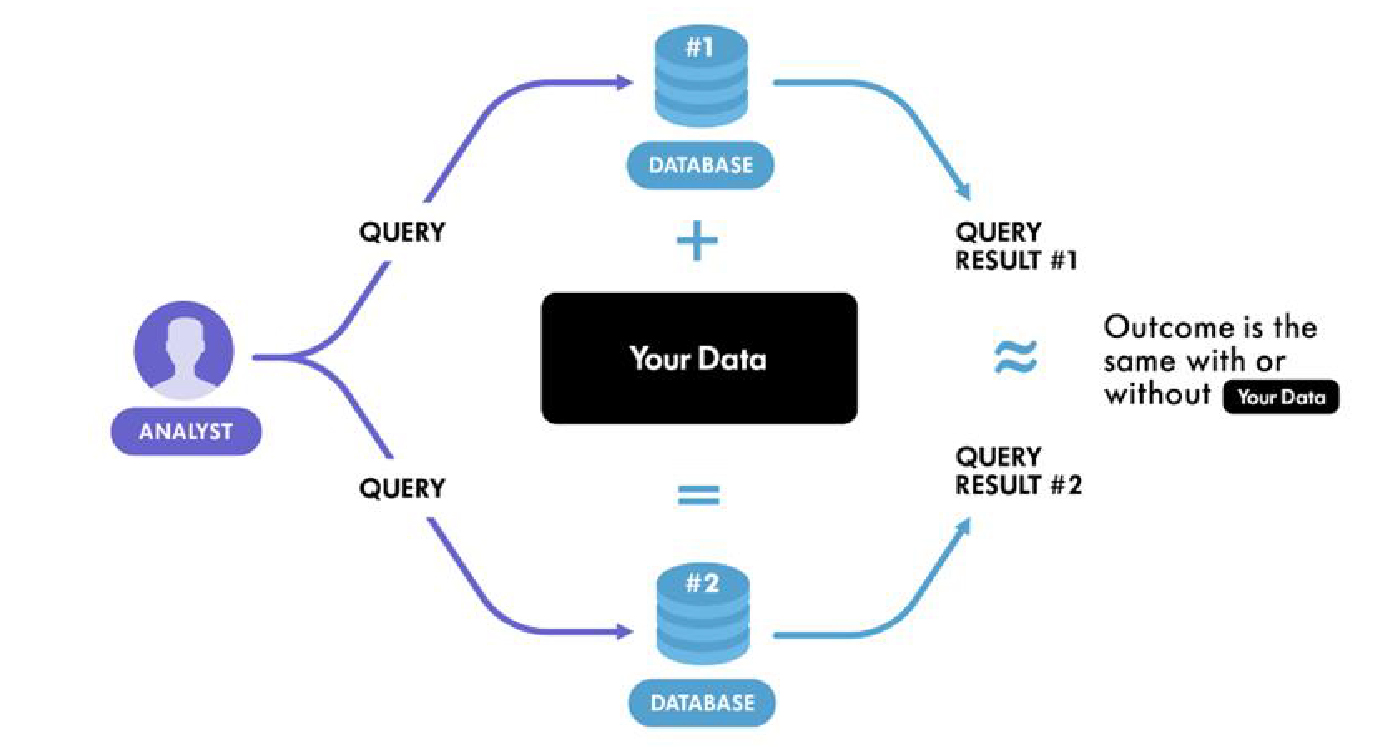
Differential privacy ensures query results stay nearly the same with or without your data, thanks to added noise that protects individuals
What it is: A technique that adds a small amount of “noise” to data, so individual records stay hidden while the big picture remains accurate.
How to do it:
- If you run surveys or analytics, use AI-powered tools that support differential privacy (Apple’s approach).
- Apply it when you need to share data externally but want to avoid exposing personal details.
- Explore government-backed examples like the U.S. Census Bureau’s disclosure avoidance system.
👉 This is perfect for teams that want useful insights without risking identity leaks.
2. Train Models with Federated Learning Instead of Centralized Data
What it is: AI trains locally on devices (like phones or wearables) and only sends updates back to a central model. No raw data leaves the device.
How to do it:
- If you build apps, explore frameworks like TensorFlow Federated or PySyft.
- For healthcare or finance, use federated learning to keep sensitive data (like patient records) locally while still improving AI performance.
- Combine this with differential privacy for extra protection (Google AI blog explainer).
👉 Great for industries where compliance is strict and raw data should never leave the device.
3. Replace Risky Data with Synthetic Data
What it is: Synthetic data is artificially generated to mimic real-world data patterns, without exposing actual people’s information.
How to do it:
- Use AI-driven synthetic data generators such as Mostly AI or Gretel for testing and training.
- Always validate the dataset to ensure it’s not leaking outliers or sensitive patterns.
- Start small: Try generating synthetic datasets for non-critical experiments first.
👉 This works well when you want to train AI but cannot legally or ethically use customer data.
4. Protect “Data in Use” with Confidential Computing
What it is: Even when data is being processed, AI can protect it using secure hardware-based environments called Trusted Execution Environments (TEEs).
How to do it:
- If you use cloud providers like Microsoft Azure Confidential Computing, Google Cloud Confidential VMs, or AWS Nitro Enclaves, enable confidential computing services.
- Run sensitive workloads inside TEEs so no one, not even the cloud provider, can peek inside.
- Pair this with AI models that handle financial or healthcare data (Confidential Computing Consortium).
👉 This is your go-to when dealing with highly sensitive workloads on the cloud.
5. Add AI-Powered Behavior Monitoring for Smarter Access
What it is: Instead of static passwords and permissions, AI can learn normal user behavior and flag anything unusual.
How to do it:
- Deploy AI-based access control systems that track login times, locations, and actions.
- Use monitoring platforms like Darktrace or Vectra AI.
- Set up automated alerts so you know if a user account starts behaving abnormally (for example, downloading too much data at once).
👉 Ideal for businesses where insider threats or compromised accounts are a major risk (Lumenalta on AI for privacy).
6. Build Privacy into Systems with Privacy by Design
What it is: The principle of embedding privacy into every stage of your system instead of adding it later.
How to do it:
- Start every project by asking: “What’s the minimum data we actually need?”
- Use AI to automate data minimization, anonymization, and deletion schedules.
- Follow frameworks such as the Privacy by Design principles.
- Consider privacy engineering practices that make protections measurable and auditable.
👉 This mindset ensures long-term trust and reduces costly retrofits later.
Frequently Asked Questions on AI and Data Privacy
Q1: How can AI improve data privacy?
AI improves privacy by detecting anomalies, anonymizing sensitive information, and applying methods like differential privacy, federated learning, and confidential computing. These approaches reduce risks while keeping data useful.
Q2: What is federated learning in data privacy?
Federated learning is a technique where AI models train locally on devices. Only model updates are shared, not raw data. This helps protect personal information while still improving AI accuracy.
Q3: Is synthetic data safe to use?
Synthetic data is generally safe because it mimics real datasets without exposing individual records. However, poor generation methods can still reveal patterns, so validation is essential.
Q4: How does Privacy by Design help organizations?
Privacy by Design ensures data protection is built into systems from the start. It reduces risks, meets compliance standards, and builds user trust by minimizing data collection and automating anonymization.
Bringing It All Together
AI is not only about making systems smarter; it can make them safer too. Here’s a quick recap of how to start:
- Hide details with differential privacy
- Keep data local with federated learning.
- Test safely with synthetic data.
- Secure workloads with confidential computing
- Spot risks early with AI-powered monitoring
- Design smart with the Privacy by Design principle.s
By layering these techniques, you can innovate confidently while keeping user trust intact.
👉 Want to go deeper? Check out our related guide: The Role of Artificial Intelligence in Enhancing Data Privacy.